

Categoria de comprimento: Large (>100 cm)
Nível trópico: Predator-fish
Padrão migratório: Local (<100 km)
Período de desova: Low + Rising
Mercado de exportação: International (outside South America)
Status do mercado: First class
Distribuição de capturas:
Pirarucu potential yield was estimated to be approximately 1,800 tons. Three important fishery regions accounted for 93% of its potential yield: Peruvian Amazon (40%), Brazilian-Colombian-Peruvian Border (33%) and Central Amazon (28%).
Notas de História Natural:
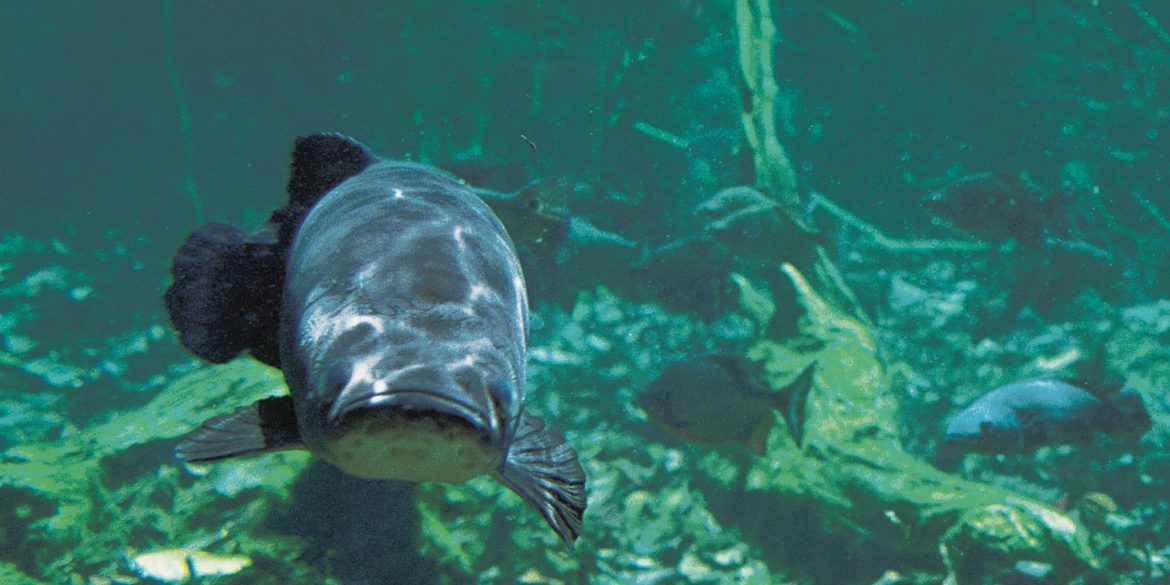
Four or five species of Arapaima are now recognized. Pirarucus are one of the two largest fish groups (genera) in the Amazon Basin. They reach at least 3 meters in length and 150 kg. The pirarucu is an air-breather and its highly modified swim bladder serves as a type of lung. Under normal circumstances the pirarucu surfaces every 20 minutes or so to breathe but can stay under much longer than this. Its surfacing behavior makes it vulnerable to harpoon fishermen. Pirarucu were probably the most important predators in floodplain lakes of the Central and Western Amazon, but populations have now been greatly reduced if not eliminated in many areas.

Distribution of pirarucu catch. Source: Barthem, R., Goulding, M. 2007. An unexpected ecosystem: the Amazon as revealed by fisheries. Missouri Botanical Garden Press.
Gallery pirarucu or paiche
| Brazil | |
| Pirarucu | Arapaima spp. |
| Bodeco | Arapaima spp. |
| Colombia | |
| Paiche | Arapaima spp. |
| Pirarucu | Arapaima spp. |
| Ecuador | |
| Paiche | Arapaima spp. |
| Peru | |
| Paiche | Arapaima spp. |